


Introduction to pH and importance
Measuring pH is a common laboratory practice and is critical for many industries. Many methods exist that detail the measurement of pH for various sample types including USP <791> for pharmaceutical samples and ISO 10523 & ASTM D1293 for water testing. Measuring pH is also critical during many manufacturing and recycling processes. In fact, many of the manufacturing processes at Inorganic Ventures depend on pH checks to ensure a chemical reaction is complete or a product is ready for the next step in a procedure. Let’s learn more about the pH scale and how important it is to use stable pH buffers to calibrate your pH meter before sample analysis.
Understanding the pH Scale
Formally, the pH value of a substance denotes the negative logarithm of hydrogen ion activity. This is sometimes referred to as the potential, or power, of hydrogen in an aqueous solution. The pH of a solution is expressed on a scale of 0–14 and it is a temperature-dependent property. Pure water, for instance, is largely neutral with a pH of 7.47 at 0°C and 6.14 at 100°C.
Temperature influences both the electrode and the sample. When measuring pH we are actually measuring an electrical potential in millivolts (mv). The Nernst Equation, shown below, gives the relationship between mv and pH, where temperature in degrees kelvin, is a component of slope,
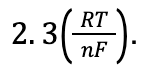
The slope increases with increased temperature. Depending on the range of the pH buffer, the pH will decrease for pH above 7, or pH will increase below pH 7.
When performing analyses that require a high degree of accuracy it is necessary to make pH measurements at constant temperature because of this temperature dependence.
Measuring the pH value of a solution is typically done using a potentiometer which – theoretically – produces a 0 millivolt (mV) differential between a sensing and reference electrode at pH 7.
Any change in acidity or alkalinity changes the electrode output, providing an accurate electrochemical basis for estimating the pH value. We say estimate here as your measurement device is only as accurate as your pH buffer solution.
How pH Measurements Are Conducted
To measure pH we need pH electrodes and a pH meter. The pH electrode measures changes in the H+ ion concentrations, which define the pH values. The sensor that measures the hydrogen ions in the sample solution is one part of the pH electrode. A reference electrode is also needed. It supplies a stable reference potential against which the pH sensor potential is measured. Combination electrodes, in which the pH sensor and the reference electrode are combined within one electrode, are very commonly used. The combination electrode is much easier than having to handle two separate electrodes for the pH measurement. The pH meter itself provides the means for the analyst to view the data transmitted from the pH electrode in a way that is convenient and usable.
The accuracy of pH measurements depends on the frequency of calibration of the electrode, which is in turn dependent on the accuracy of the pH standards that are used for the electrode calibration. At Inorganic Ventures calibration of the pH electrode is required before every analysis. Inorganic Ventures manufactures and tests NIST traceable pH buffer standards, under ISO 17034 and ISO 17025 normative references.
Calibration of the electrode may be performed using two or more calibration buffers. First, the zero-point, where the electrode reads zero mv, must be known. This is usually the pH 7 buffer. The second calibration buffer should be as close as possible to the pH of the solution that is to be measured. The two buffers must differ by at least two pH units. The zero-point buffer calibration must occur before the second calibration buffer, or slope calibration, is measured. Since the pH of a solution is temperature dependent, it is necessary to know the temperature at which pH measurements will be performed, and choose the certified value of the pH calibration standards to match the required temperature. The Certificates of Analysis for Inorganic Ventures pH standards list pH certified values for a range of temperatures.
If you are making your measurements at 20 ℃ you would enter the certified pH of your buffer reported at 20 ℃ for the calibration information.
The Role of pH Buffer Solutions
As mentioned, pH buffer solutions are used as calibration standards for the pH electrode. A buffer is defined as a solution that resists changes to its pH when small amounts of acid or base are added to it. It is the selection of the components of the buffer solution, and ratios of those components, that create the buffering effect. A buffer must consist of the combination of an acid and its conjugate base, or a base and its conjugate acid. An example of a buffer is pH 7 buffer which is made from the base, NaOH and an acid salt, potassium dihydrogenphosphate.
Buffers work best when the pK a, i.e. the log of the dissociation constant of the conjugate acid, is close to the desired working range of the buffer. Using our example of the pH 7 buffer, potassium dihydrogenphosphate, the conjugate acid, has the pK a ≅ 7.21. Over the working range of the buffer the pH will change only slightly with the addition of acid or base. If too much acid or base is added to the buffer the capacity of the buffer to resist change to the pH will be overwhelmed. The pH of the buffer will then change rapidly, showing jumps to higher or lower pH.
Types of pH Buffers
The capacity of the buffer refers to the amount of acid or base which can be added before the pH alters substantially. It may also be characterized as the level of strong acid or base that needs to be added to alter the pH of a liter of solution by one pH unit. The buffer range is the pH range where a buffer can effectively neutralize added acids and bases whilst maintaining a steady pH. This is critical for processes or reactions which need specific and stable pH ranges and requires the selection of the appropriate type of buffer:
Acidic buffers
- Acidic buffers have a pH less than 7, meaning the concentration of hydrogen ions is greater than in pure water.
- Fermentation products are generally in the acidic range, from pH 4 to pH 7. Acidic pH buffers would be used for this type of testing.
Basic buffers
- Basic buffers have a pH greater than 7 and have a lower concentration of hydrogen ions than in pure water.
- Referring again to fermentation processes, a pH 10 buffer might be necessary for a different stage of the fermentation process. Paper production can be either alkaline, pH 7 to 9, or acidic, pH 4 to 5. Another example of the use of alkaline pH buffers is in the fabric dying, where the optimal pH of many dyes is between pH 10 to 11.5.
Neutral buffers
- Neutral buffers have a pH close to 7, similar to pure water, as the concentration of hydrogen ions is similar.
- Neutral pH buffers are used in the manufacture of many cosmetic and personal hygiene products. It is very critical that the pH of these products be close to the pH of the skin. Acidic or basic products could cause severe irritation. Testing of microbial cultures might require a neutral pH phosphate buffer.
Electroplating of metals is an example of where the pH can range from very acidic to very basic. Gold, zinc and chrome will be electroplated in alkaline baths between pH 9 to 13. For nickel and copper the best pH for electroplating is between pH 3.8 to 4.2.
The Importance of NIST-Traceable pH Buffers
As a certified reference material (CRM) manufacturer, Inorganic Ventures is accredited under ISO 17034 and ISO 17025 normative references. These accreditations require that CRMs are traceable to NIST Standard Reference Materials (SRM). To establish the NIST traceability of our CRMs, the certification data is produced by testing our products vs. the NIST SRM that is applicable to that product. For example, pH 4 buffer is certified vs. NIST SRM 185i, Potassium Hydrogen Phthalate. The intended use of this SRM is for calibrating electrodes for pH measuring systems, specifically for the pH 4 range.
Chemists are increasingly following the NIST framework of pH metrology to create a chain of responsibility from the standard reference material (SRM) manufacturer all the way to the end-user. NIST-traceable pH buffers also set the benchmark for creating reliable pH measurements throughout the widest range of applications with uncertainties of values as little as 0.01 pH units.
This is increasingly important as more and more chemists buy into the NIST framework of pH metrology, building an unbroken chain of reliability from the standard reference material (SRM) manufacturer through to the end-user.
Today, NIST-traceable pH buffers set the benchmark for reliability in pH measurements across the broadest possible spectrum of applications, with uncertainties approaching values as small as 0.01 pH units.
Applications of pH Buffer Solutions
Laboratory research
- The concept of pH buffers was originally borne out of biochemical studies and the need for pH control in every area of biological research. Growing mammalian cells in culture media is extremely pH-sensitive, meaning that adding a pH buffer can help to ensure that the pH does not fluctuate or inhibit growth.
Pharmaceutical development
- A lot of natural products, synthetic organic chemicals, and pharmaceuticals are weak acids. This means that in their non-ionized forms they can be extracted from aqueous solutions using organic solvents. However if the pH has led to ionization, their retention in the aqueous phase is more desirable. Using pH buffers in these solutions helps to govern the ratio of ionized and neutral forms, enhancing the selectivity of the separation process.
Hygiene and Cosmetic Product Testing
- pH buffers are used to manufacture many cosmetic and personal hygiene products to ensure that the pH remains neutral or marginally alkaline. The pH buffers are extremely important as they prevent products from becoming too acidic or too alkaline, which could ultimately cause skin irritations.
Food and beverage industry
- pH buffers are used in the production of alcohol, being added before fermentation to ensure that the pH remains at a particular level to stop acidity, which would negatively impact the product. Because the fermentation process brings about pH changes, buffer solutions are a critical element of alcoholic drinks.
How to Choose the Right pH Buffer Solution
When selecting pH buffers to calibrate your pH meter you will want to select a pH buffer below and above the expected pH of your samples. Samples can be quickly screened by using pH testing strips, then more accurate measurements can be taken on a calibrated pH meter. We would recommend that when calibrating your pH meter you use pH buffers roughly 3 pH units apart. This may require that you use more than two pH buffers if you need to cover a wide pH range. The most common three-point pH calibration curve would use pH buffers at a pH of 4, 7 and 10.
Common Mistakes in pH Measurement and Buffer Use
It is common when analysts manufacture their own pH buffers from dry chemicals for the final pH to be inaccurate when compared to a NIST traceable pH standard. The reason for this inaccuracy can be due to simple measurement inaccuracy during weighing and diluting, and/or the purity of the dry chemicals used, including if any moisture picked up by the dry chemicals during storage. Analysts can source pH buffers from ISO 17034 accredited CRM manufacturers like Inorganic Ventures for guaranteed pH buffer accuracy.
Looking for pH Buffer Solutions?
Inorganic Ventures is one of the industry’s leading suppliers of NIST-traceable certified reference materials (CRMs) for pH measurements and analytical chemistry. We specialize in generating custom solutions for specific client workflows, providing full documentation to ensure complete accountability and reliability.
If you are looking for PH Buffer solutions certified via direct comparison to NIST SRMs, why not contact a member of the Inorganic Ventures team today?