
A Case of Unexpected Instability: Sulfur Analysis
Introduction to Sulfur Analysis
Sulfur analysis is a routine endeavor for many analytical chemists. Sulfur is the tenth most abundant element in the universe and the fifth most abundant on earth. Due to its prevalence, naturally occurring sulfur is often quantified in water, soil, and mineral samples. Beyond environmental occurrence, sulfur content is also often controlled for in food, pharmaceutical, and biological samples. Sulfur is a popular component of many consumer products as well, including cement, pesticides, fertilizer, rubber, bleached paper, and even car batteries!
Challenges with Sulfuric Acid (H₂SO₄) as a Source
A popular approach to sulfur certified reference materials is to use sulfuric acid (H2SO4) as the source material. Sulfuric acid is common in chemistry labs, is relatively easy to use, and is completely miscible in water – allowing for combinations of virtually any ratio. However, sulfur analysis is rarely isolated; sulfur is typically included among many other ‘routine’ analytes in standard testing methods. This is where the use of H2SO4 can prove problematic for analysts. Solutions containing Ba, Pb, Ca, and (to a lesser extent) Sr along with S from H2SO4 are likely to demonstrate instability and precipitation, worsening with increasing concentration, due to the formation of insoluble sulfates:
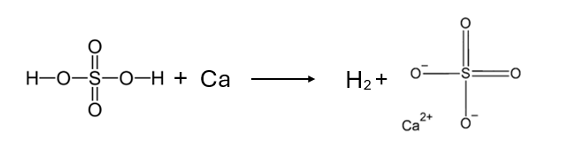
Using Methanesulfonic Acid (MSA) as an Alternative
A lesser-known sulfur source material is methanesulfonic acid (MSA). This material is colorless and odorless, similar to sulfuric acid. This simple alkylsulfonic acid is soluble in water and is commonly used outside of analytical chemistry for electroplating, in oil drilling applications to improve reservoir permeability, and is known as a model electrolyte for electrochemical applications. MSA is also a popular acid for catalyzing organic reactions and as a dissolution reagent.

Guidelines for Manual Preparation
In Inorganic Ventures’ products containing sulfur, MSA is used as a ‘default’ starting material to avoid precipitation during combination with aforementioned sensitive analytes, which is incredibly common in both stock and custom product compositions. If combining sulfur with Ba, Pb, Ca, or Sr manually, be sure to take note of the source material for your sulfur standard. If sulfuric acid is necessary, be aware that these elements will need to be handled separately from sulfur to avoid precipitation of minimally soluble sulfates.
Our Sulfur Standard Options
Inorganic Ventures offers sulfur standards made from both starting materials (starting material information is visible on the product pages on our website – be sure to double check your material when purchasing standards!):
High Concentration S from Sulfuric Acid Concentrates
Low Concentration S from Sulfuric Acid Concentrates
High concentration S from MSA Concentrates
Low concentration S from MSA Concentrates are available as custom products, please reach out to us!
Get in Touch
If you would like more information about sulfur analysis, please contact our Technical Support Chemist team at [email protected].
Don't Miss Our Podcast
Check out our Bench Boost podcast episode discussing MSA and H₂SO₄!