
Sample Prep Guide
This expanding series features dozens of elements. Each part includes detailed preparation and solution chemistry for samples containing the element of interest.
In-depth guides, technical papers, and quick-reference resources on ICP analysis, standard preparation, and laboratory best practices.
Our flagship multi-part guides, covering everything from sample preparation to ICP operation in depth.
In-depth technical papers on instrument calibration, standard stability, and specialized applications for ICP-OES and ICP-MS.
Quick-reference papers on elemental hazards, product stability, and standard shelf life — written for practical, everyday use.
Resources on traceability, calibration standards, and ISO/quality system requirements for the accredited lab.

This expanding series features dozens of elements. Each part includes detailed preparation and solution chemistry for samples containing the element of interest.

An essential 17-part online guide for chemical analysts. Topics cover all phases of sample collection, preparation, measurement, and data analysis.

A 16-part online guide intended for anyone preparing samples and standards for measurement using ICP-OES or ICP-MS. Topics cover many day-to-day tasks required by all operators.

A white paper presenting a new analytical method for measuring wear and additive metals in used oil samples.
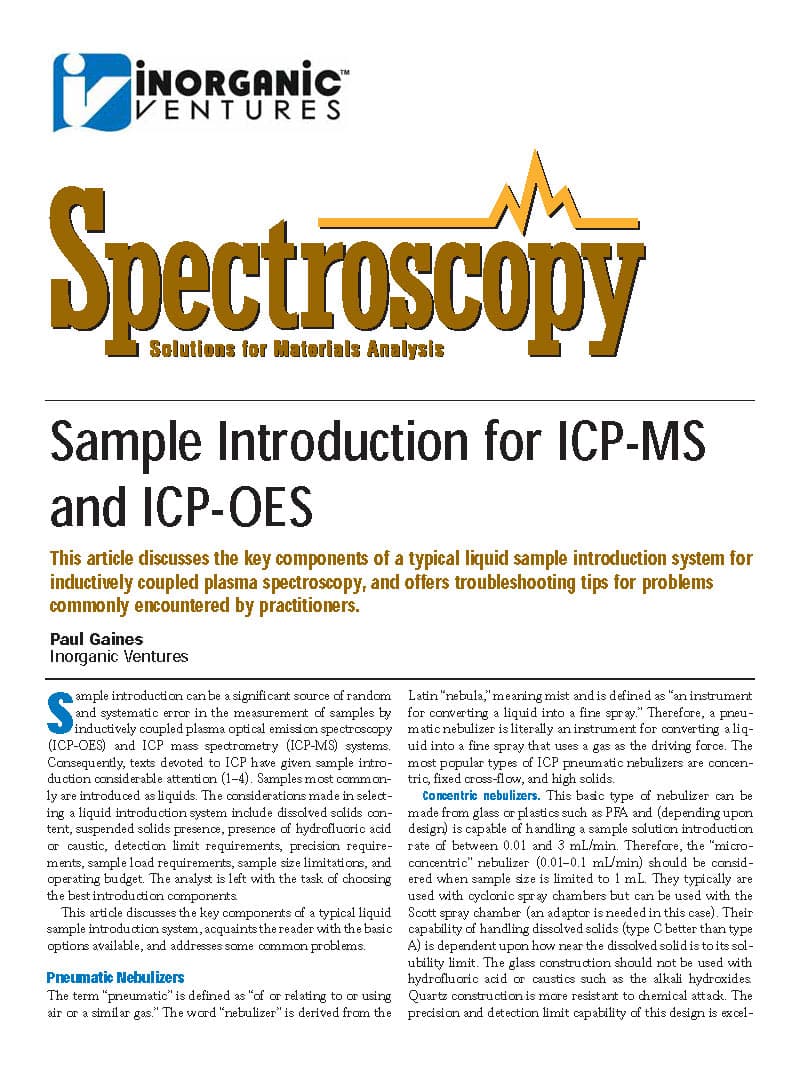
A technical overview of sample introduction systems and considerations for ICP-MS and ICP-OES.

A concise guide to selecting and using internal standards for ICP-OES and ICP-MS, covering key selection criteria and commonly used stock options

Examines how to prepare a stable, safe ICP standard covering all 24 elements regulated under USP 232 and ICH Q3D.
Explains how error budgets are used to calculate and report the certified value uncertainties of reference materials.
An application note on hybrid aqueous/organic solvent standards designed for metals-in-oil testing.

Explains how wavelength/mass calibration, tuning, and performance tracking help ICP-OES and ICP-MS instruments maintain accuracy over time.

Traces the regulatory history of USP 232 elemental impurity limits, from the original 2010 proposal through the current revised limits.
A rapid sample preparation method for zeolite analysis by ICP, replacing traditional HF/boric acid and fusion techniques.
Details Inorganic Ventures' in-house purification and certification method for high-purity sodium chlorite (NaClO2) standards.
In-house stability data on mercury solutions across concentrations, matrices, and container material
Practical guidance on keeping silver standards stable, including tips for working safely with HCl matrices.
A year-long stability study of 65 elements at ppb concentrations in LDPE containers, identifying which elements are prone to loss over time.
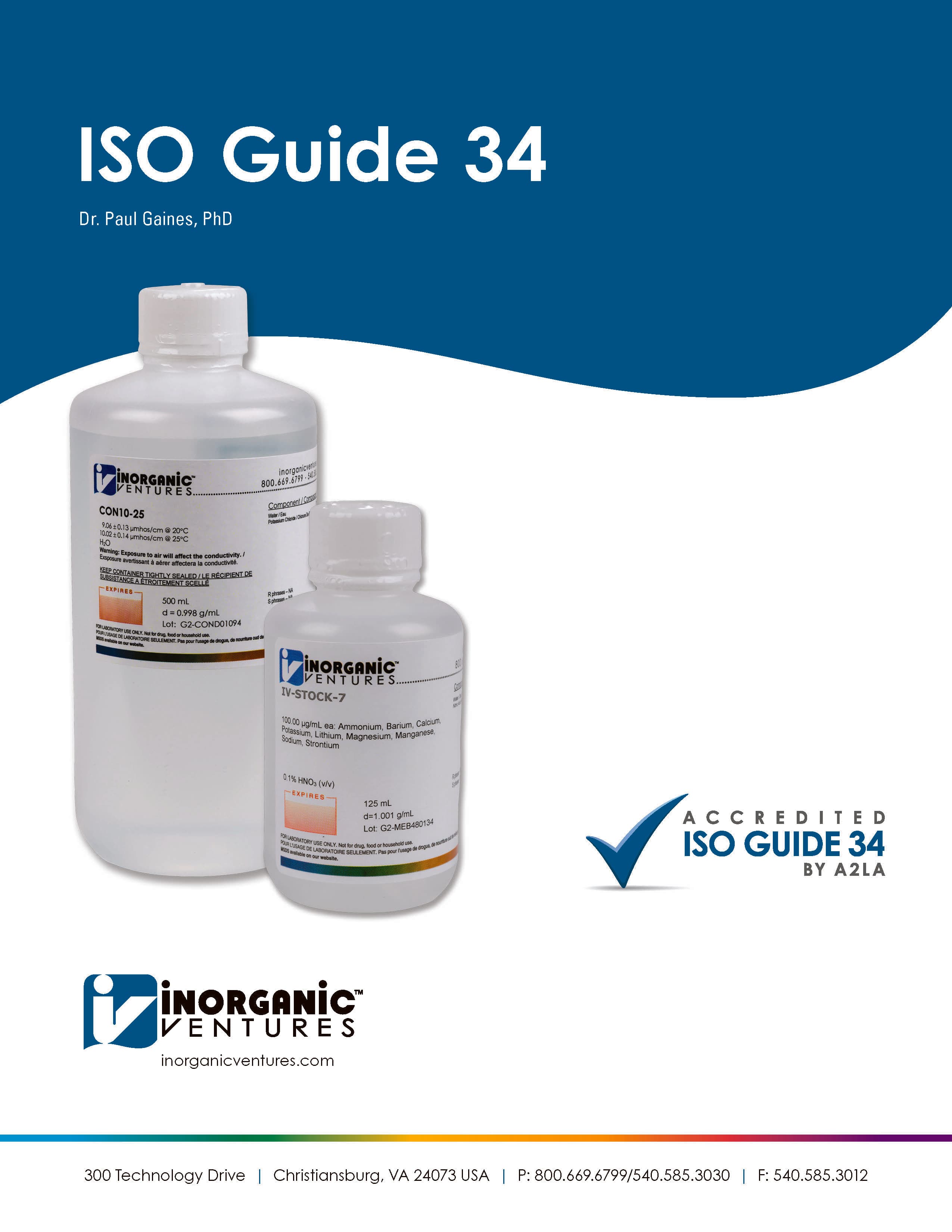
A white paper on ISO Guide 34 requirements for reference material producers.
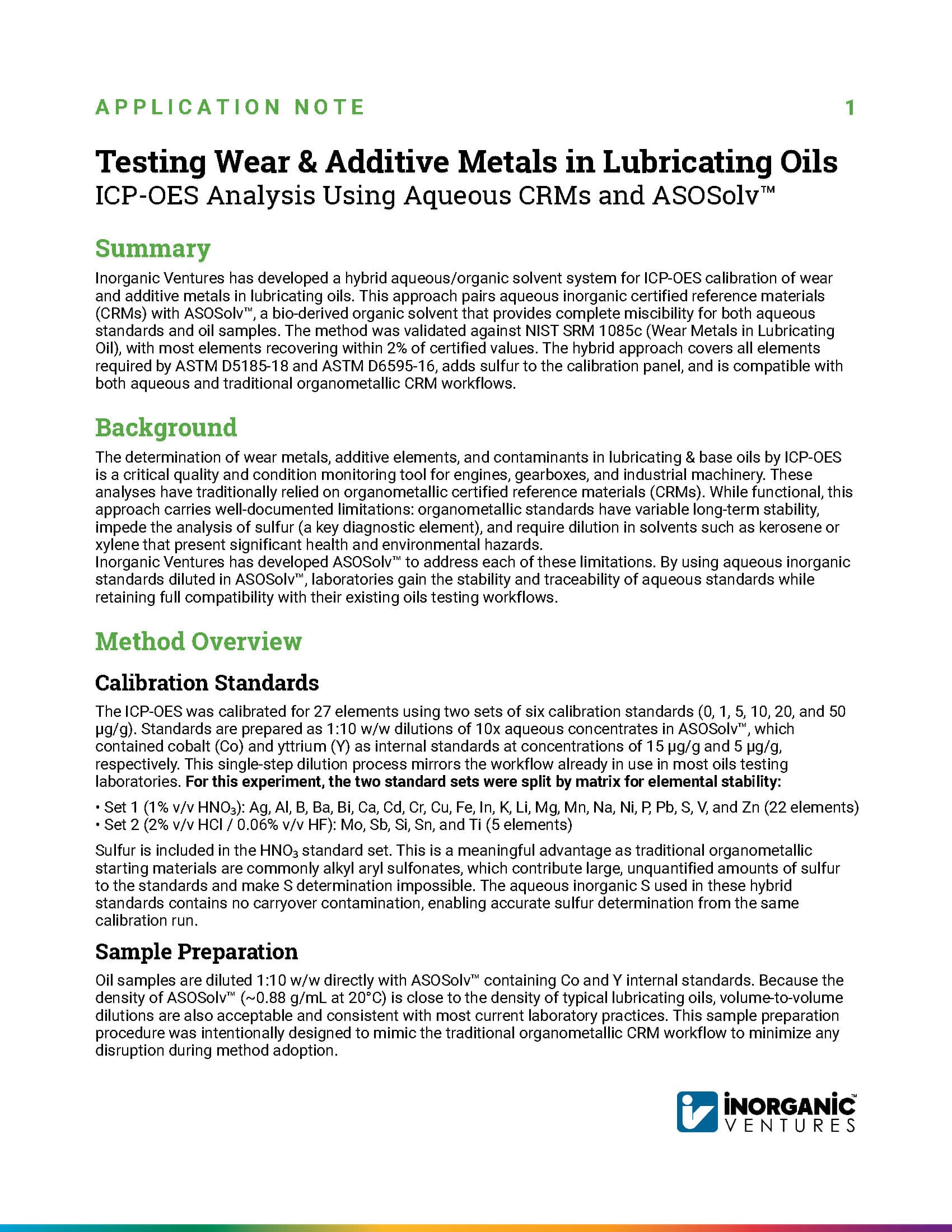
A validated ICP-OES method pairing aqueous CRMs with ASOSolv™ for wear metal and additive analysis in lubricating oils — matching NIST SRM 1085c results within 2%, adding sulfur to the calibration panel, and covering ASTM D5185-18 and D6595-16 with no changes to existing lab workflows.

A Teledyne LABS application note evaluating automated coolant sample prep using the CETAC SimPrep+ paired with ICP-OES, covering accuracy, precision, throughput, and washout across 12 elements. It shows how automating dilutions, standards, and QC prep cuts labor and operator error in predictive maintenance workflows.
.jpg&w=3840&q=75)
A one-page consumer resource covering key facts about cyanide.
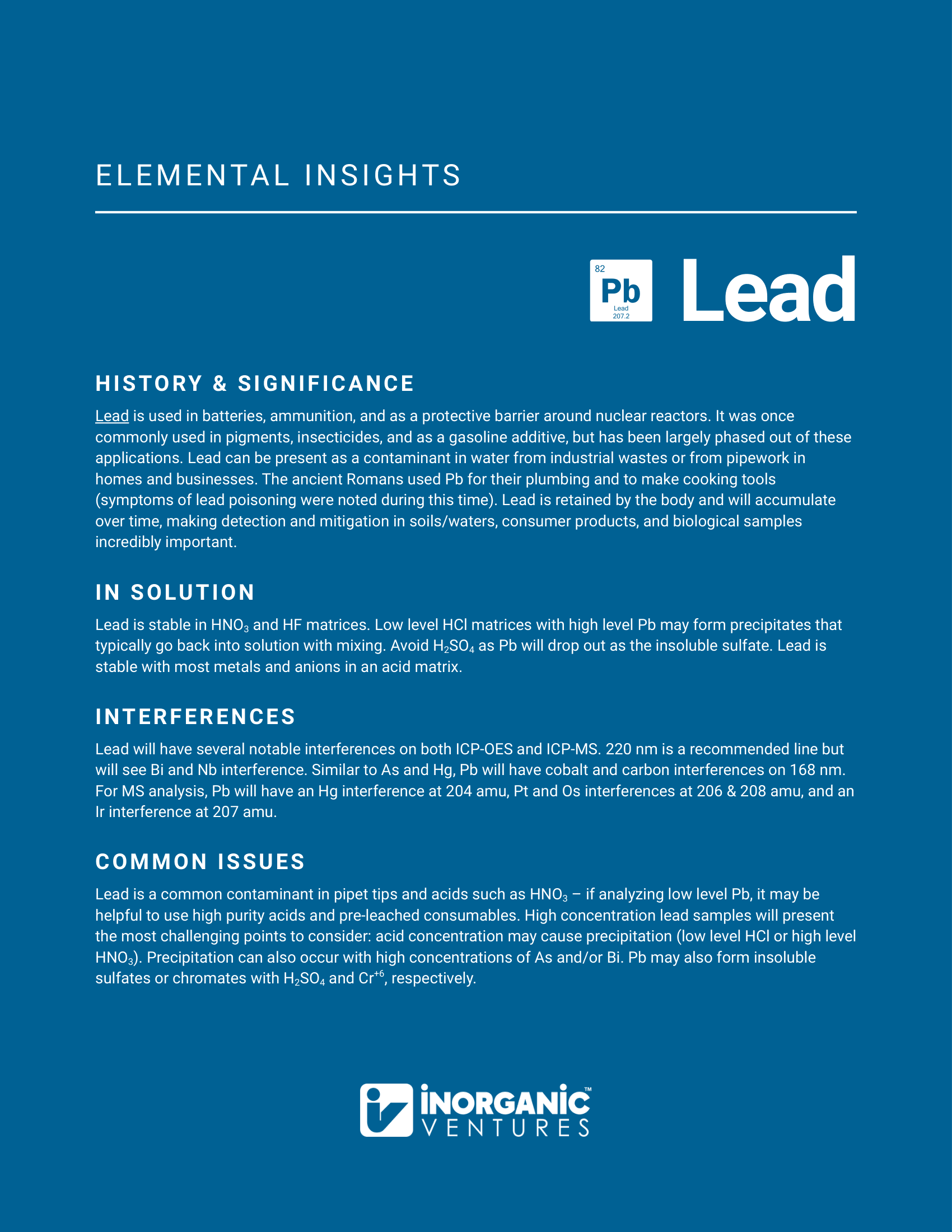
A one-page consumer resource covering key facts about lead.
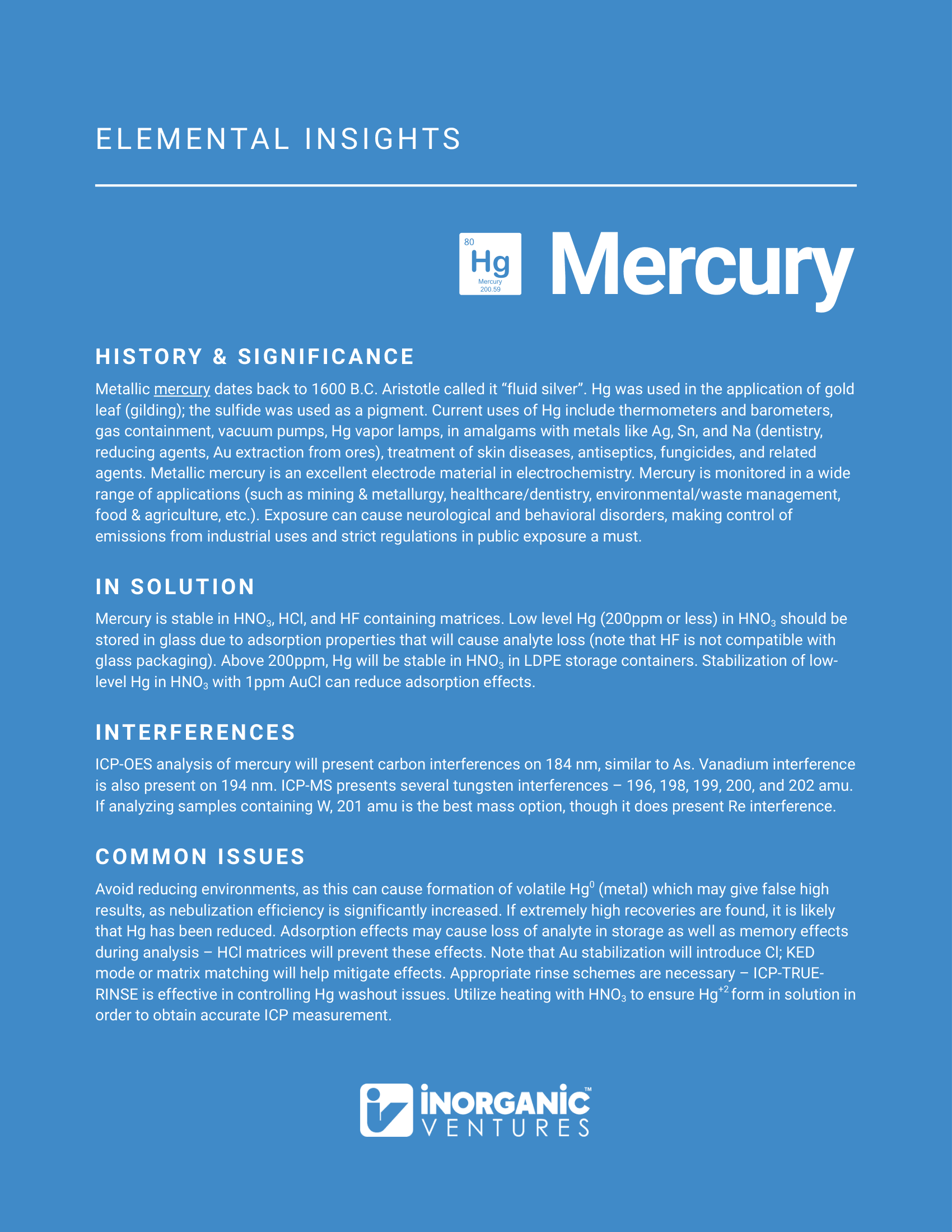
A one-page consumer resource covering key facts about mercury.

A one-page consumer resource covering key facts about cadmium.

A one-page consumer resource covering key facts about arsenic.
Explains why a short, well-documented chain of traceability to the SI matters for CRM accuracy, not just compliance.
Explains why standard expiration dates can't safely be extended, breaking down the roles of chemical stability, transpiration, and human error.
Details Inorganic Ventures' dual-method (ICP-OES and ICP-MS) process for determining and verifying trace metallic impurity data on certificates of analysis.
Debunks misleading "stability dating" and shelf-life marketing claims, explaining what really determines a standard's expiration date.
Draws a clear distinction between shelf life and expiration date, backed by Inorganic Ventures' own transpiration data.

Explains why most inorganic standards are classified as hazardous materials and what that means for DOT/IATA shipping compliance.

A quick-reference flyer laying out daily, weekly, monthly, biannual, and annual maintenance tasks for ICP-OES and ICP-MS instruments.

Explains how Inorganic Ventures developed Primary Certified Reference Materials (PCRM™) for elements like osmium and iridium that lack NIST-equivalent standards.
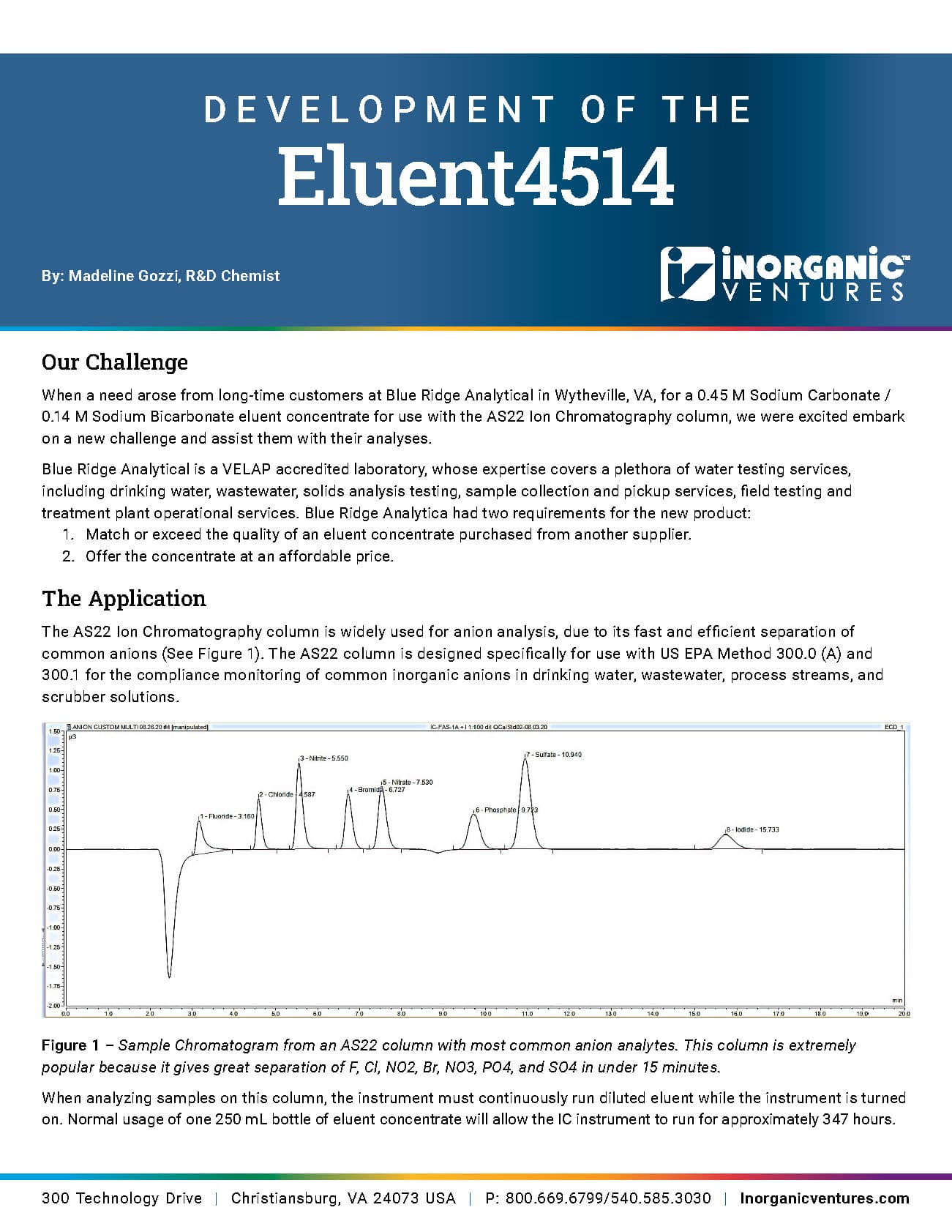
A case study on developing a high-purity, contaminant-free eluent concentrate for ion chromatography, in partnership with a customer lab.
Clarifies what "second source" means for QC standards and how Inorganic Ventures approaches independent preparation of calibration and verification standards.
Explains the certification issue date, lot expiration date, and period of validity used for CRMs packaged with Transpiration Control Technology (TCT).
Explains why a short, well-documented chain of traceability to the SI matters for CRM accuracy, not just compliance.
Explains why standard expiration dates can't safely be extended, breaking down the roles of chemical stability, transpiration, and human error.
Details Inorganic Ventures' dual-method (ICP-OES and ICP-MS) process for determining and verifying trace metallic impurity data on certificates of analysis.
Debunks misleading "stability dating" and shelf-life marketing claims, explaining what really determines a standard's expiration date.
Draws a clear distinction between shelf life and expiration date, backed by Inorganic Ventures' own transpiration data.
Explains why most inorganic standards are classified as hazardous materials and what that means for DOT/IATA shipping compliance.
A practical guide covering hands-on tips and techniques for accurate, reliable titration work.

Explains what NIST traceability actually means, and the right questions to ask a CRM manufacturer to verify a traceability claim.
Breaks down the three key ISO accreditations for standard manufacturers and what each one certifies.